The Soybean Miracle of Tian Ye Qin Xue
Research Process & Methodology
It All Starts with a Single Soybean!
It All Starts with a Single Soybean!
Research Process & Methodology
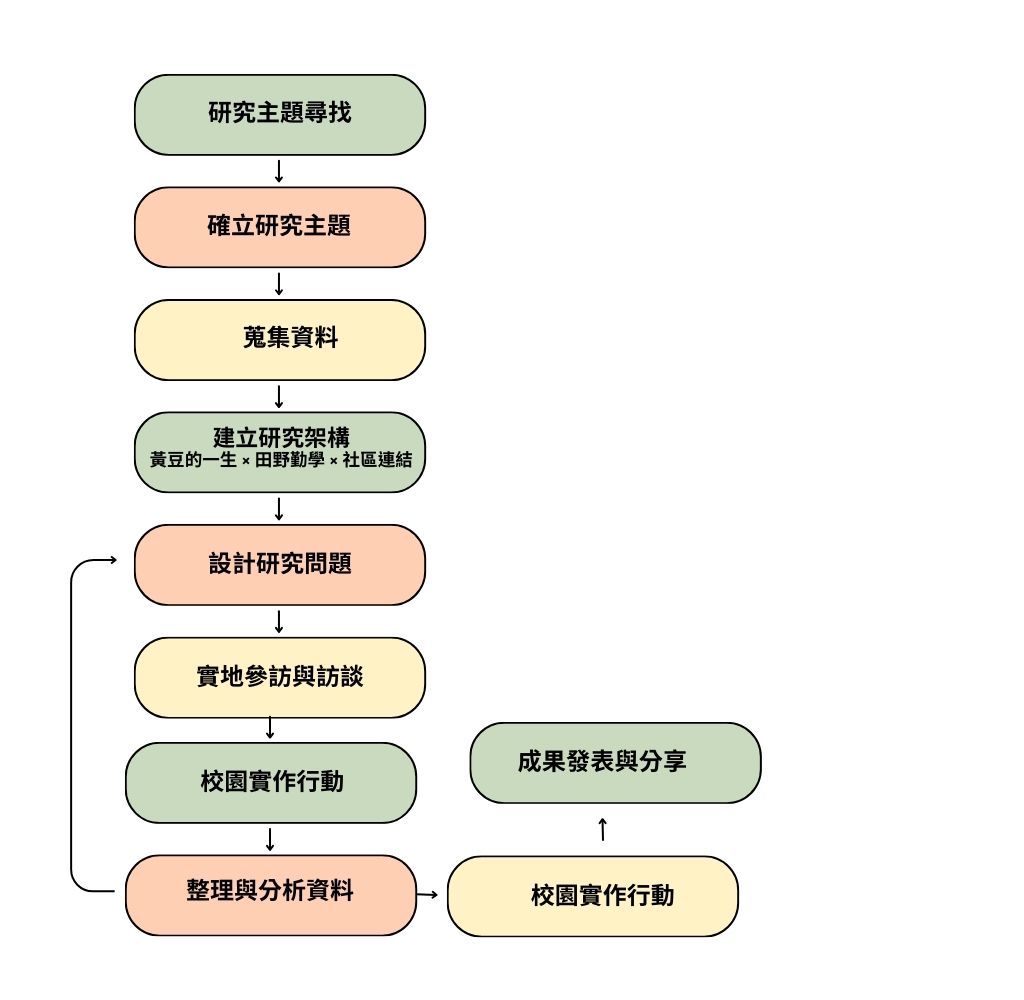
Project Core Objectives
Our project, titled "Starting from a Single Soybean: Tian Ye Qin Xue Connecting Land, Community, and a Sustainable Future," aims to understand how "Tian Ye Qin Xue" promotes domestic soybean cultivation through practical research and action. We explore how they connect the land, the community, and various stakeholders, and finally, how we as students can participate in and support sustainable initiatives.
Our project, titled "Starting from a Single Soybean: Tian Ye Qin Xue Connecting Land, Community, and a Sustainable Future," aims to understand how "Tian Ye Qin Xue" promotes domestic soybean cultivation through practical research and action. We explore how they connect the land, the community, and various stakeholders, and finally, how we as students can participate in and support sustainable initiatives.
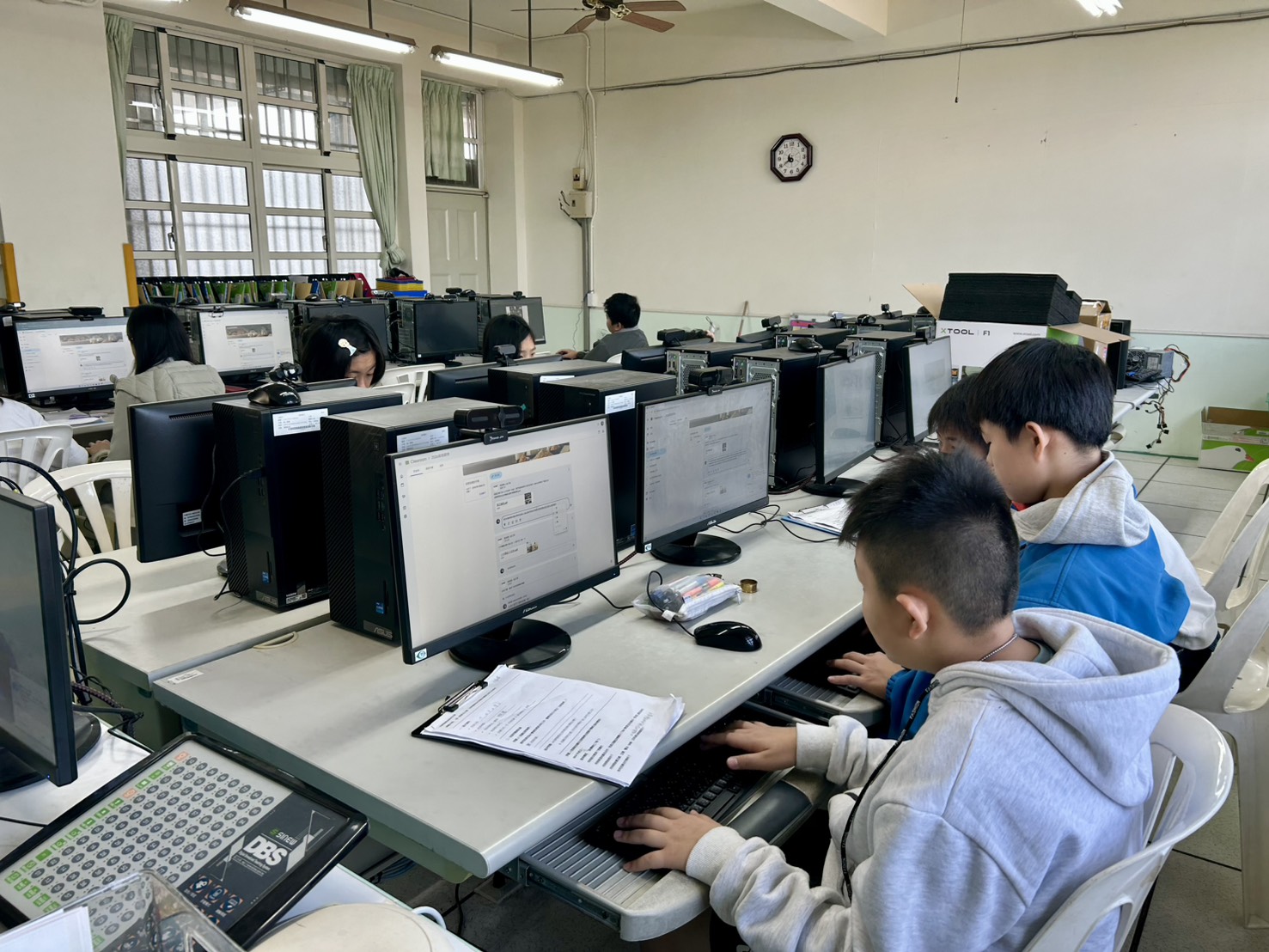
Research Methodology
Throughout our research, we employed diverse methods to collect and organize data:
1. Data Collection (Literature & Web Research)
We reviewed the official Tian Ye Qin Xue website and related media reports to gather data on soybeans, food and agricultural education, and sustainable farming. We then organized and categorized this vital information for our records.
Throughout our research, we employed diverse methods to collect and organize data:
1. Data Collection (Literature & Web Research)
We reviewed the official Tian Ye Qin Xue website and related media reports to gather data on soybeans, food and agricultural education, and sustainable farming. We then organized and categorized this vital information for our records.
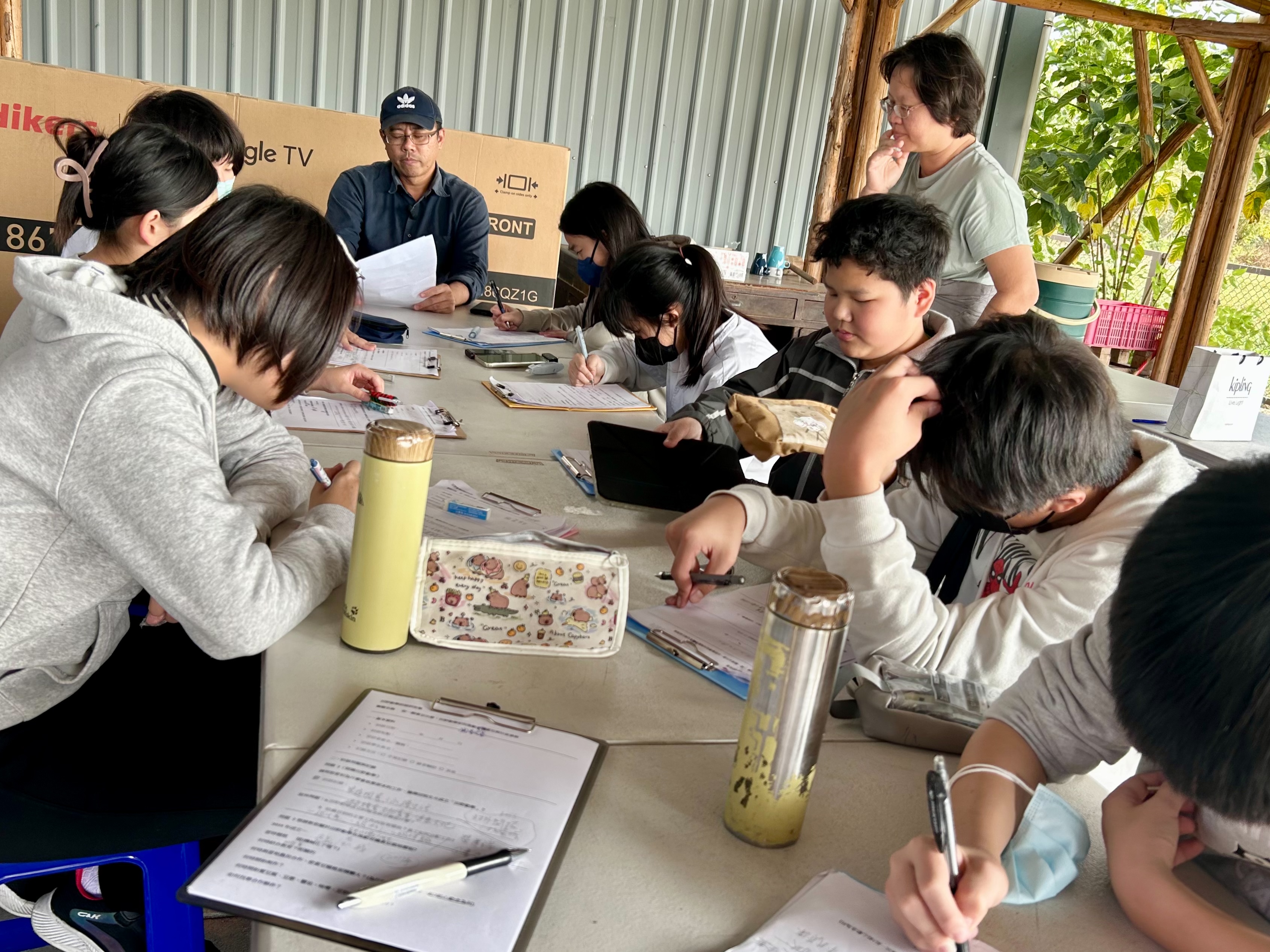
2.Methodology Overview
After collecting preliminary data on the research topic, our team members designed interview questions focused on areas we wanted to explore in greater depth. We interviewed the members of "Tian Ye Qin Xue" and their related partners, carefully recording and organizing the interview content.
Application of AI Technology
We utilized AI-assisted tools to transcribe the interviews into key summaries, ensuring both the accuracy of the information and the efficiency of our analysis.
After collecting preliminary data on the research topic, our team members designed interview questions focused on areas we wanted to explore in greater depth. We interviewed the members of "Tian Ye Qin Xue" and their related partners, carefully recording and organizing the interview content.
Application of AI Technology
We utilized AI-assisted tools to transcribe the interviews into key summaries, ensuring both the accuracy of the information and the efficiency of our analysis.
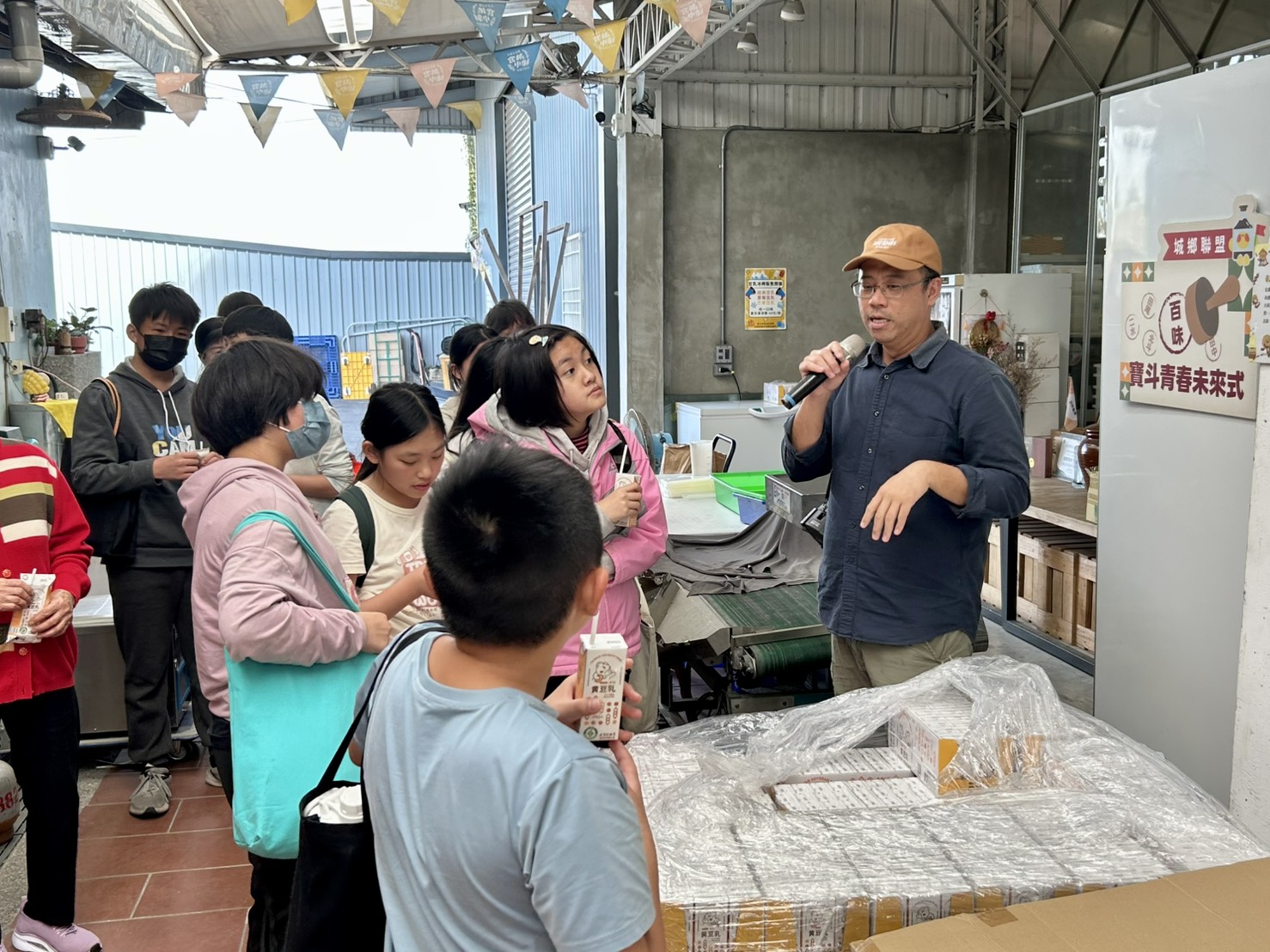
3.Field Visits & Observation
We visited the Tian Ye Qin Xue base, farming fields, and the Red Brick Market to observe and understand soybean cultivation, processing, and promotion methods. During these visits, we took photographs, recorded our observations, and engaged in hands-on activities.
We visited the Tian Ye Qin Xue base, farming fields, and the Red Brick Market to observe and understand soybean cultivation, processing, and promotion methods. During these visits, we took photographs, recorded our observations, and engaged in hands-on activities.
4.Campus Implementation & Action
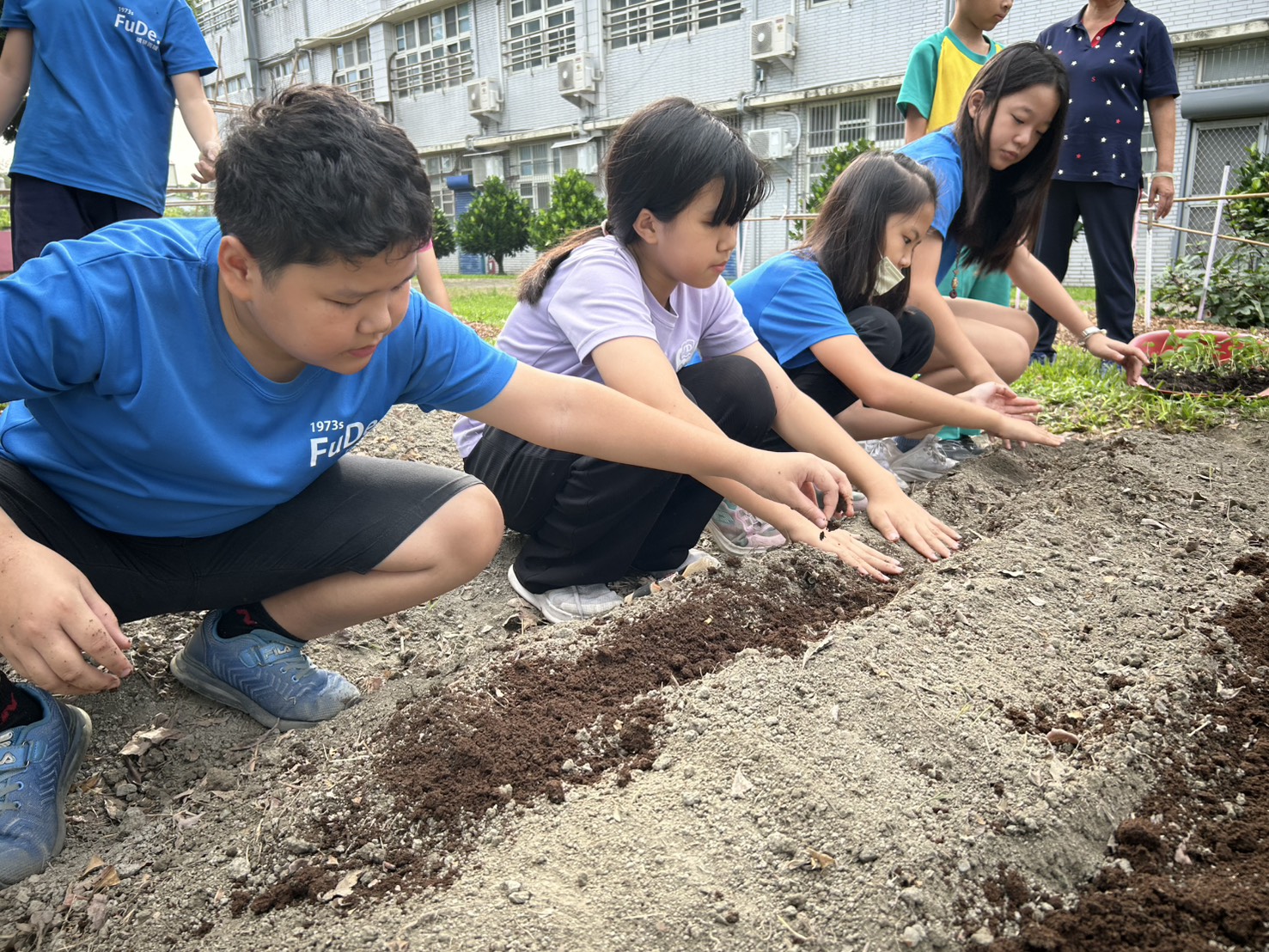
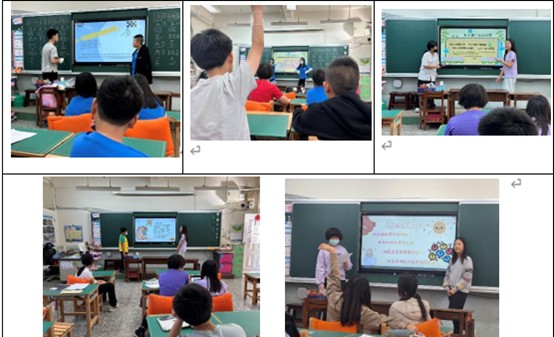
We planted soybeans on campus to observe their life cycle and participated in making soy products to experience the "Soybean Trilogy." Furthermore, we promoted local soybeans at the community reading center through reading sessions and creative beancurd skin cooking activities. Finally, we compiled our research findings into posters and presentations to share with teachers and students.
We planted soybeans on campus to observe their life cycle and participated in making soy products to experience the "Soybean Trilogy." Furthermore, we promoted local soybeans at the community reading center through reading sessions and creative beancurd skin cooking activities. Finally, we compiled our research findings into posters and presentations to share with teachers and students.
5.Group Discussions & Synthesis
Team members divided tasks to collect information on different topics and reported back in groups. We collectively discussed interview questions, synthesized our research findings, and organized them into posters and this website to complete our final project presentation.
Team members divided tasks to collect information on different topics and reported back in groups. We collectively discussed interview questions, synthesized our research findings, and organized them into posters and this website to complete our final project presentation.
Project Reflections
Zhan Jun-Xuan
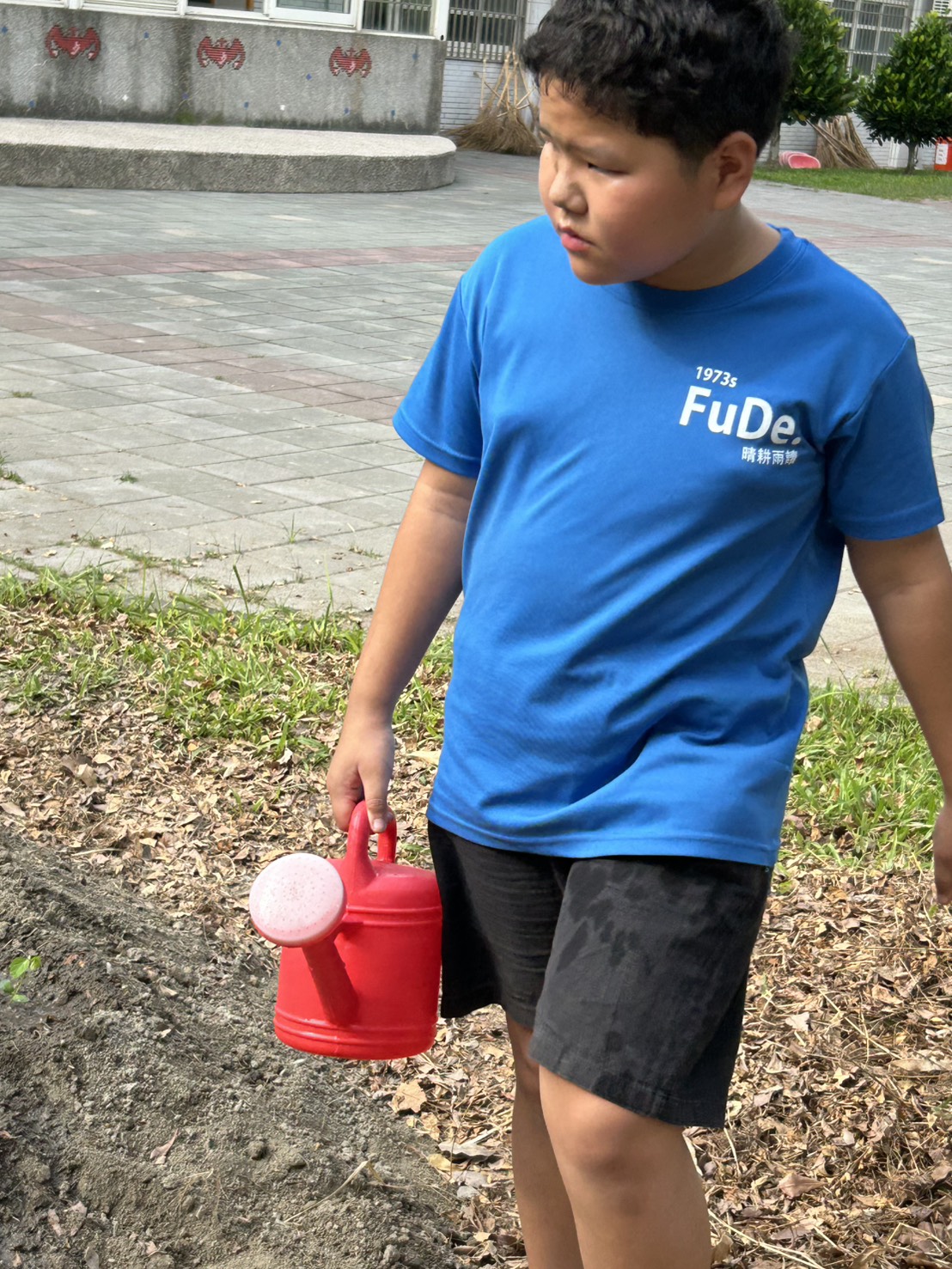
Participating in this CyberFair project taught me about the hard work and dedication of farmers, and made me realize that farming is not an easy task. I originally thought soybeans needed frequent watering and meticulous care to grow, but I found out they are actually quite drought-resistant and don't need much water to thrive. However, during the cultivation process, weeding, observing the weather, and careful management are still necessary for the soybeans to mature successfully. Once harvested, soybeans can be turned into common foods like tofu, soy milk, and soy sauce. This makes me treasure the food I eat every day even more and feel deeply grateful for the farmers' efforts.
Participating in this CyberFair project taught me about the hard work and dedication of farmers, and made me realize that farming is not an easy task. I originally thought soybeans needed frequent watering and meticulous care to grow, but I found out they are actually quite drought-resistant and don't need much water to thrive. However, during the cultivation process, weeding, observing the weather, and careful management are still necessary for the soybeans to mature successfully. Once harvested, soybeans can be turned into common foods like tofu, soy milk, and soy sauce. This makes me treasure the food I eat every day even more and feel deeply grateful for the farmers' efforts.
Song Wei-Han
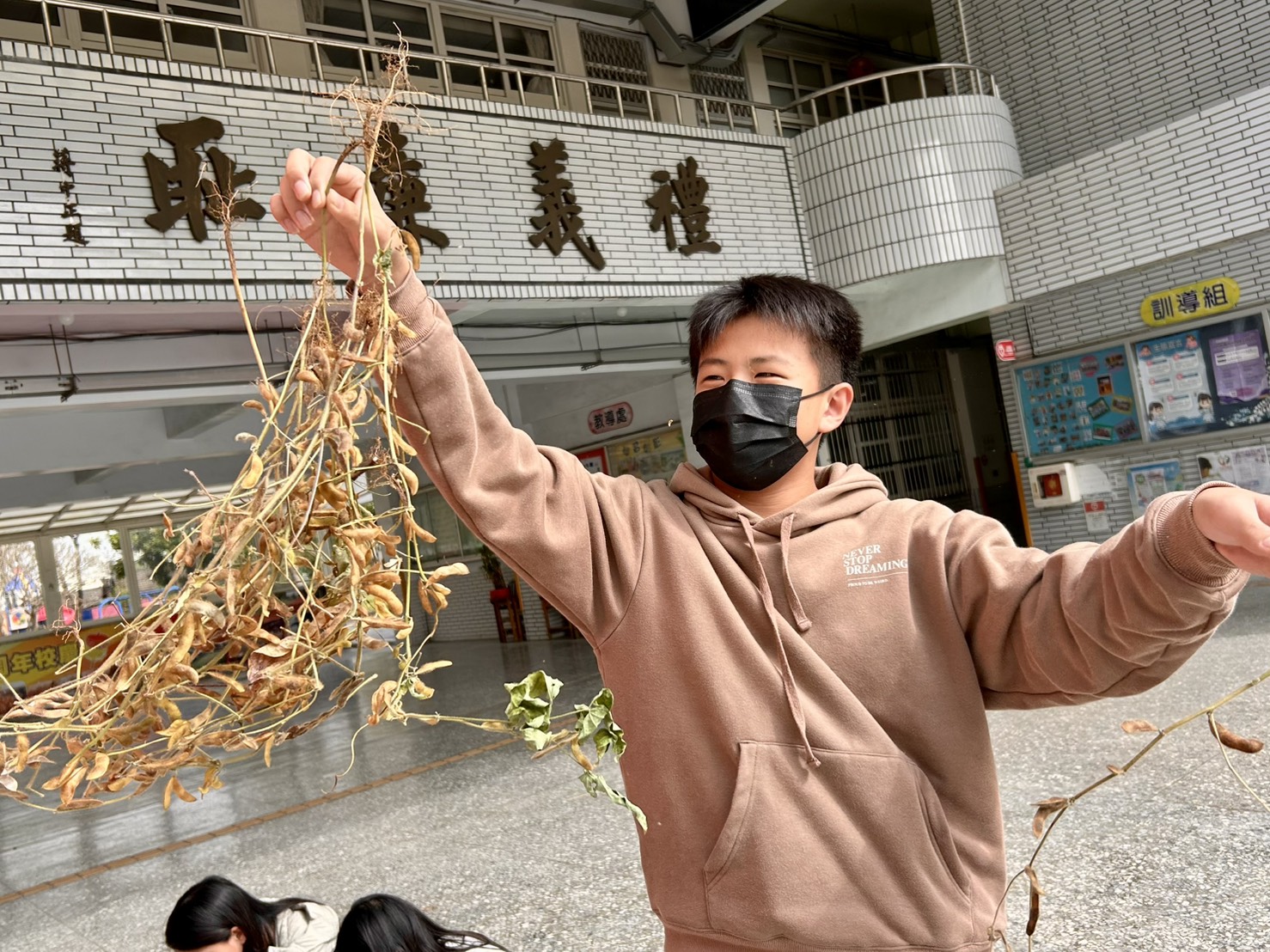
I really enjoyed this project because I got to discuss, interview, and collaborate with my classmates. From brainstorming the theme and arranging interviews to organizing data and creating presentations, every step required repeated revisions and discussions.
Although I felt stressed and exhausted at times, seeing the final result presented successfully made all the effort worthwhile. We also went to "Tian Ye Qin Xue" to conduct interviews, grind soy milk, and make tofu and tofu pudding; these experiences left a deep impression on me. This activity was more than just writing a report—it taught me the importance of teamwork and helped me gain a lot of extracurricular knowledge.
I really enjoyed this project because I got to discuss, interview, and collaborate with my classmates. From brainstorming the theme and arranging interviews to organizing data and creating presentations, every step required repeated revisions and discussions.
Although I felt stressed and exhausted at times, seeing the final result presented successfully made all the effort worthwhile. We also went to "Tian Ye Qin Xue" to conduct interviews, grind soy milk, and make tofu and tofu pudding; these experiences left a deep impression on me. This activity was more than just writing a report—it taught me the importance of teamwork and helped me gain a lot of extracurricular knowledge.
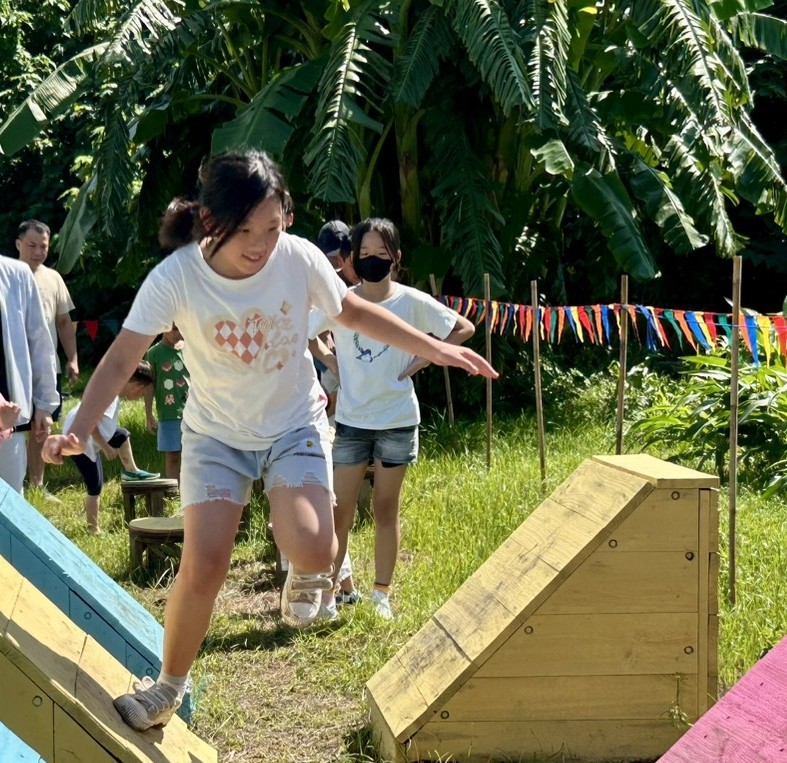
Chen Yan-Xin
Participating in this CyberFair project, I learned a lot about soybeans and farmers. I originally thought planting soybeans was just like other plants—watering them daily—but I discovered that overwatering actually harms their growth. Through interviews and visits, I gained a better understanding of how natural farming benefits the land. While creating the presentation and delivering the speech, my classmates and I worked together seamlessly. Although I was nervous on stage, I was truly happy inside. I gained so much from this activity, and I hope future students will continue to work hard for our school and create even better results.
Participating in this CyberFair project, I learned a lot about soybeans and farmers. I originally thought planting soybeans was just like other plants—watering them daily—but I discovered that overwatering actually harms their growth. Through interviews and visits, I gained a better understanding of how natural farming benefits the land. While creating the presentation and delivering the speech, my classmates and I worked together seamlessly. Although I was nervous on stage, I was truly happy inside. I gained so much from this activity, and I hope future students will continue to work hard for our school and create even better results.
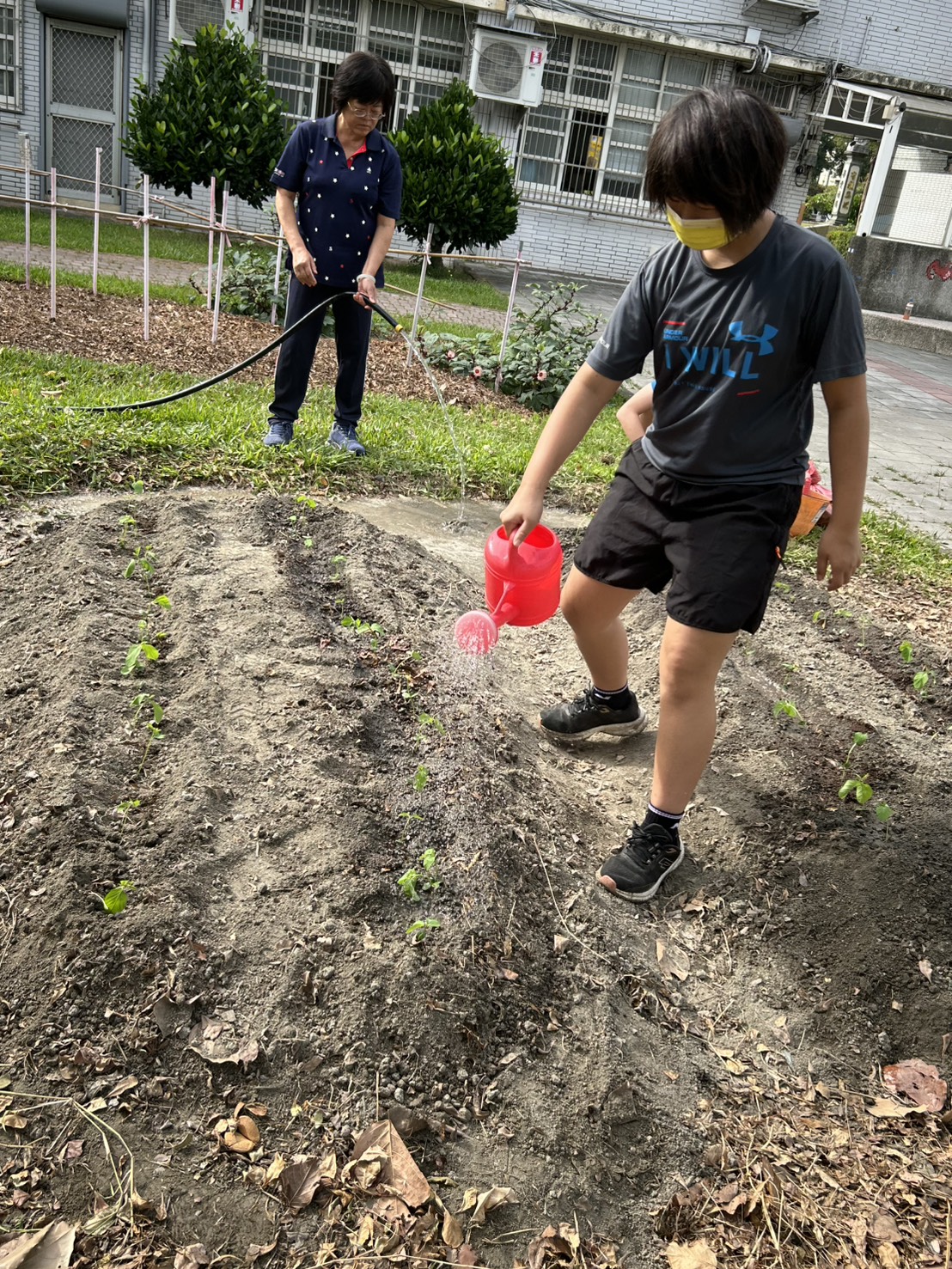
Lin Fang-Yu
Participating in this CyberFair project taught me that farming requires patience. It took several months from planting to harvest, which made me realize that only with patient waiting can one see results. I also learned that soybeans should not be overwatered, as it affects the quality of the beans. Through learning about natural farming, I understand the importance of protecting the land and environment, and I appreciate the hardships farmers endure working under the scorching sun. In the future, I will treasure food more, take only what I can eat, and not waste the farmers' hard work.
Participating in this CyberFair project taught me that farming requires patience. It took several months from planting to harvest, which made me realize that only with patient waiting can one see results. I also learned that soybeans should not be overwatered, as it affects the quality of the beans. Through learning about natural farming, I understand the importance of protecting the land and environment, and I appreciate the hardships farmers endure working under the scorching sun. In the future, I will treasure food more, take only what I can eat, and not waste the farmers' hard work.
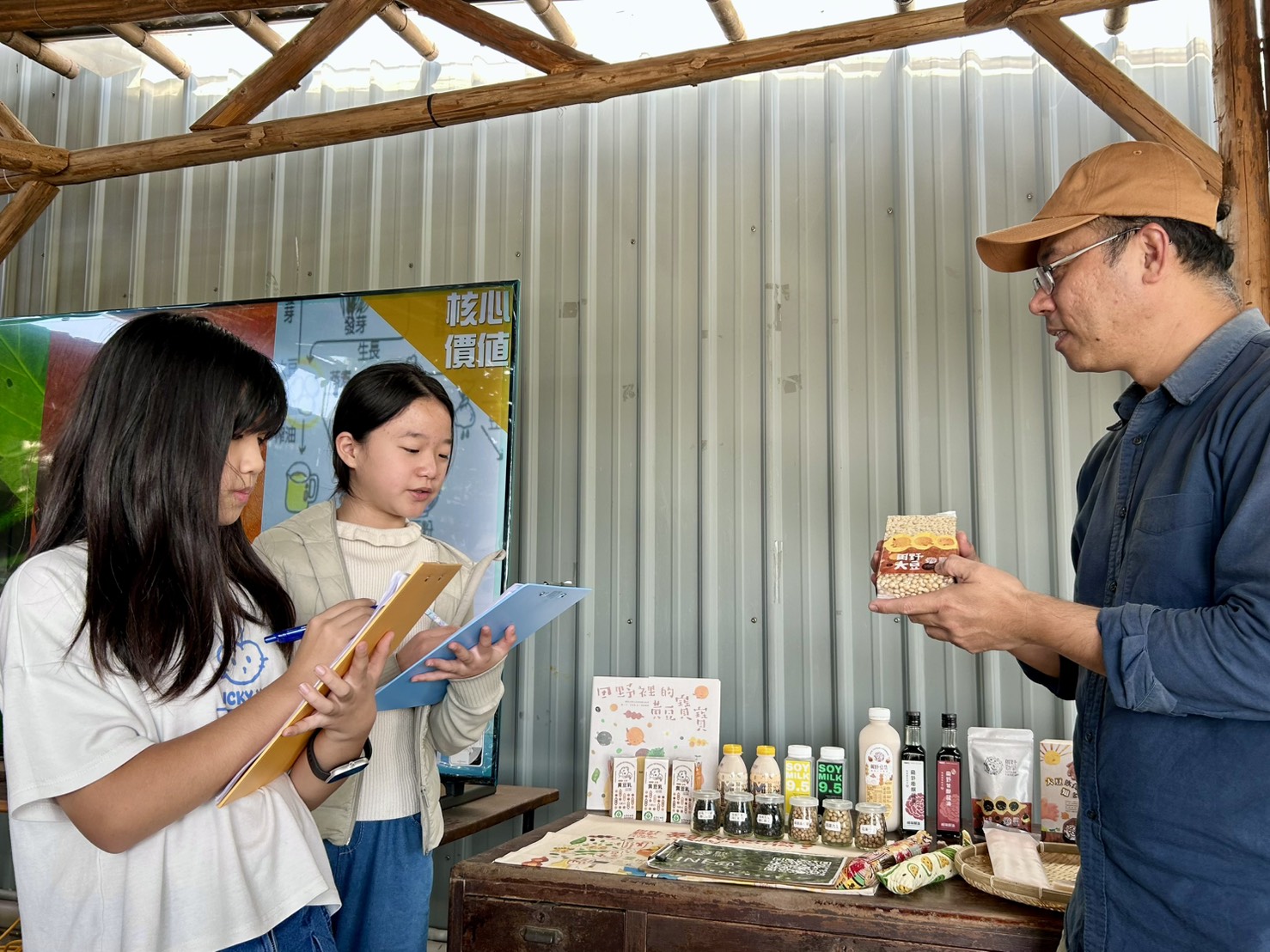
Chen Ying-Yun
After participating in the CyberFair, I discovered that soybeans can be made into many products, such as tofu, tofu pudding, and soy sauce. Although the process from planting to harvesting was hard, and I sometimes wanted to give up, everything felt worthwhile when I saw the results. We also made tofu pudding by hand and interviewed Mr. Chen; the whole process was both fulfilling and interesting. Without everyone's cooperation and help, we wouldn't have been able to complete this project smoothly. Thank you to the teachers for accompanying us all the way.
After participating in the CyberFair, I discovered that soybeans can be made into many products, such as tofu, tofu pudding, and soy sauce. Although the process from planting to harvesting was hard, and I sometimes wanted to give up, everything felt worthwhile when I saw the results. We also made tofu pudding by hand and interviewed Mr. Chen; the whole process was both fulfilling and interesting. Without everyone's cooperation and help, we wouldn't have been able to complete this project smoothly. Thank you to the teachers for accompanying us all the way.
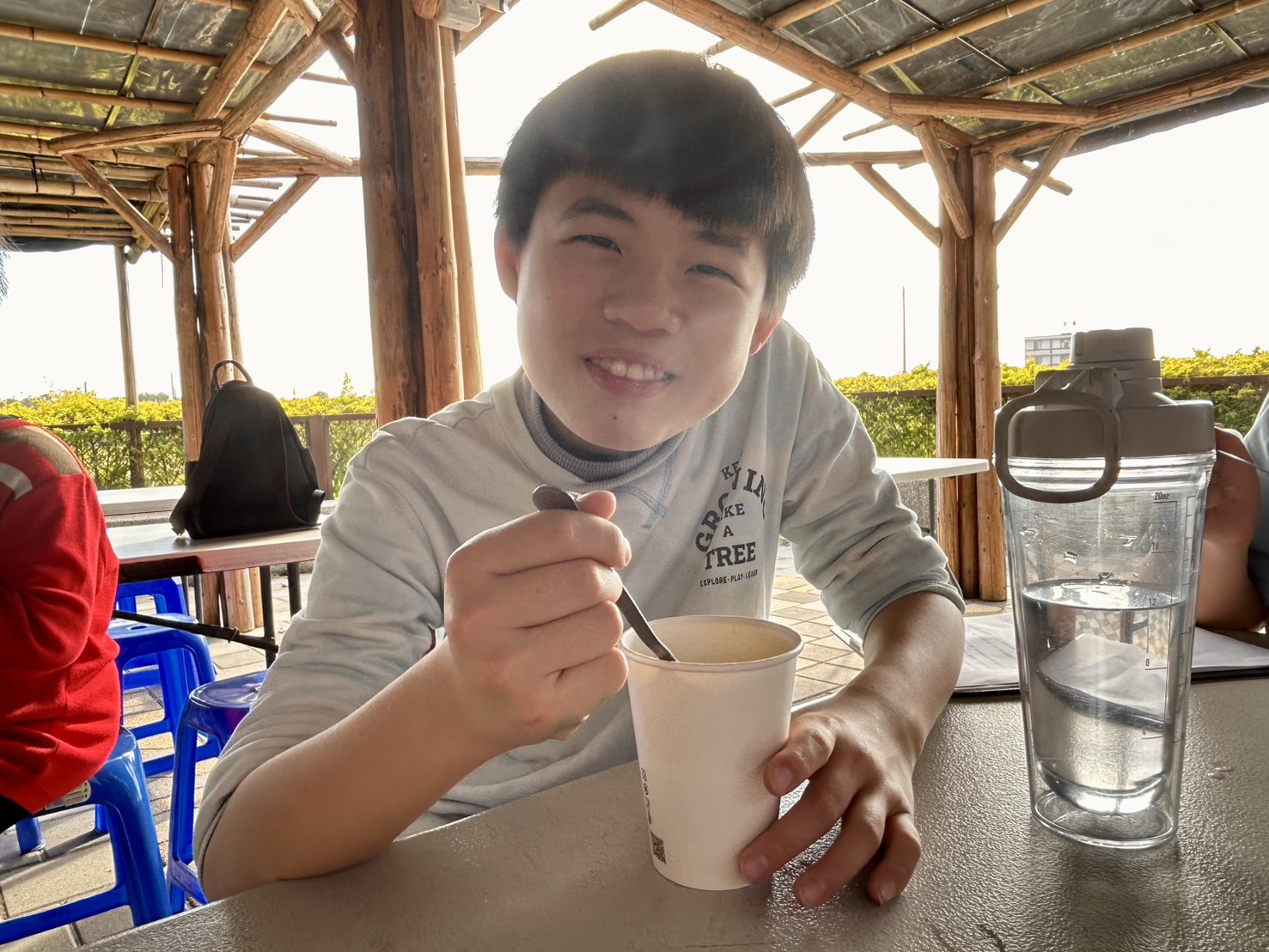
Chen Ding-Lin
This CyberFair experience gave me a deep appreciation for the hardships farmers face. Farming is not as simple as imagined; it requires a lot of time and physical effort. Especially when planting in autumn and winter, the weather is cold, and the water makes our hands freezing, which made me truly understand the hardship of farmers waking up early to work every day. From planting soybeans to interviewing Mr. Chen Guang-Jing, and finally to the project presentation, I felt very happy throughout. Seeing the harvested results in the end brought me a great sense of accomplishment.
This CyberFair experience gave me a deep appreciation for the hardships farmers face. Farming is not as simple as imagined; it requires a lot of time and physical effort. Especially when planting in autumn and winter, the weather is cold, and the water makes our hands freezing, which made me truly understand the hardship of farmers waking up early to work every day. From planting soybeans to interviewing Mr. Chen Guang-Jing, and finally to the project presentation, I felt very happy throughout. Seeing the harvested results in the end brought me a great sense of accomplishment.
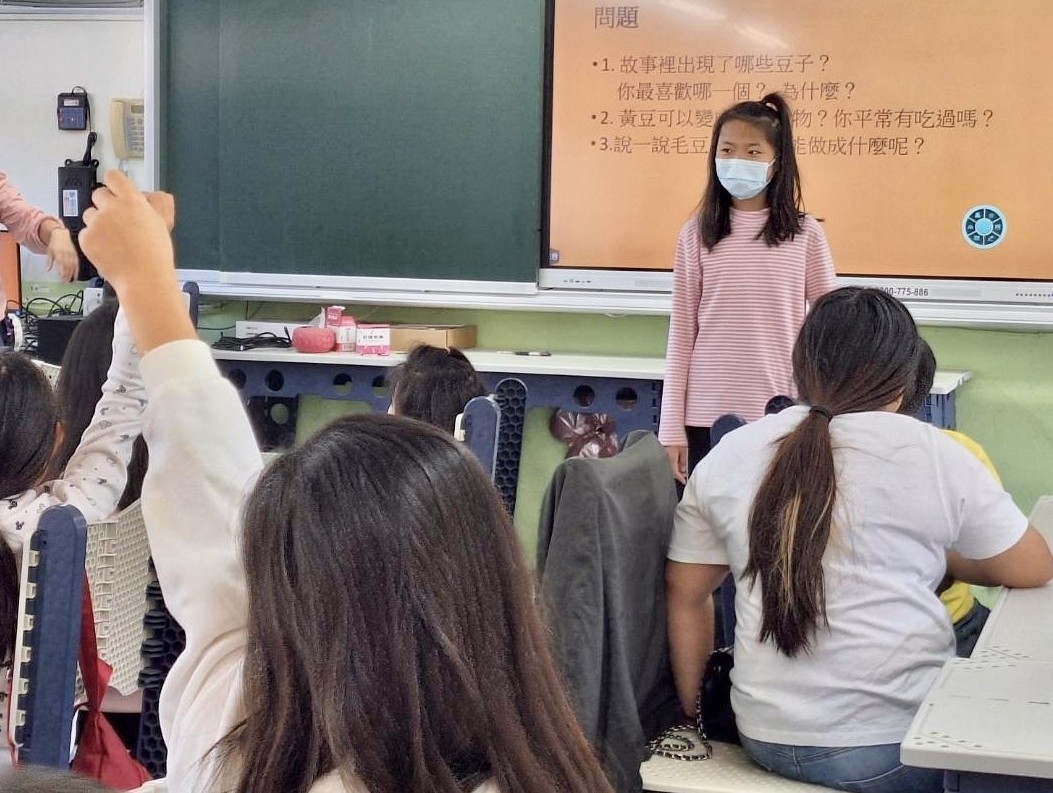
Zhang Zhen-Yun
At the beginning of the project, I didn't really know what to do, but as I learned over time, I became more proficient. Watching the soybeans grow slowly from a small plant made me a bit worried at first due to the slow growth, but seeing them successfully harvested in the end made me understand the hard work of farmers and the importance of waiting. Thank you to Mr. Chen Guang-Jing for taking us to visit Tian Ye Qin Xue, and thank you to our teachers for their guidance. I hope to have the opportunity to participate in the CyberFair again in the future.
At the beginning of the project, I didn't really know what to do, but as I learned over time, I became more proficient. Watching the soybeans grow slowly from a small plant made me a bit worried at first due to the slow growth, but seeing them successfully harvested in the end made me understand the hard work of farmers and the importance of waiting. Thank you to Mr. Chen Guang-Jing for taking us to visit Tian Ye Qin Xue, and thank you to our teachers for their guidance. I hope to have the opportunity to participate in the CyberFair again in the future.
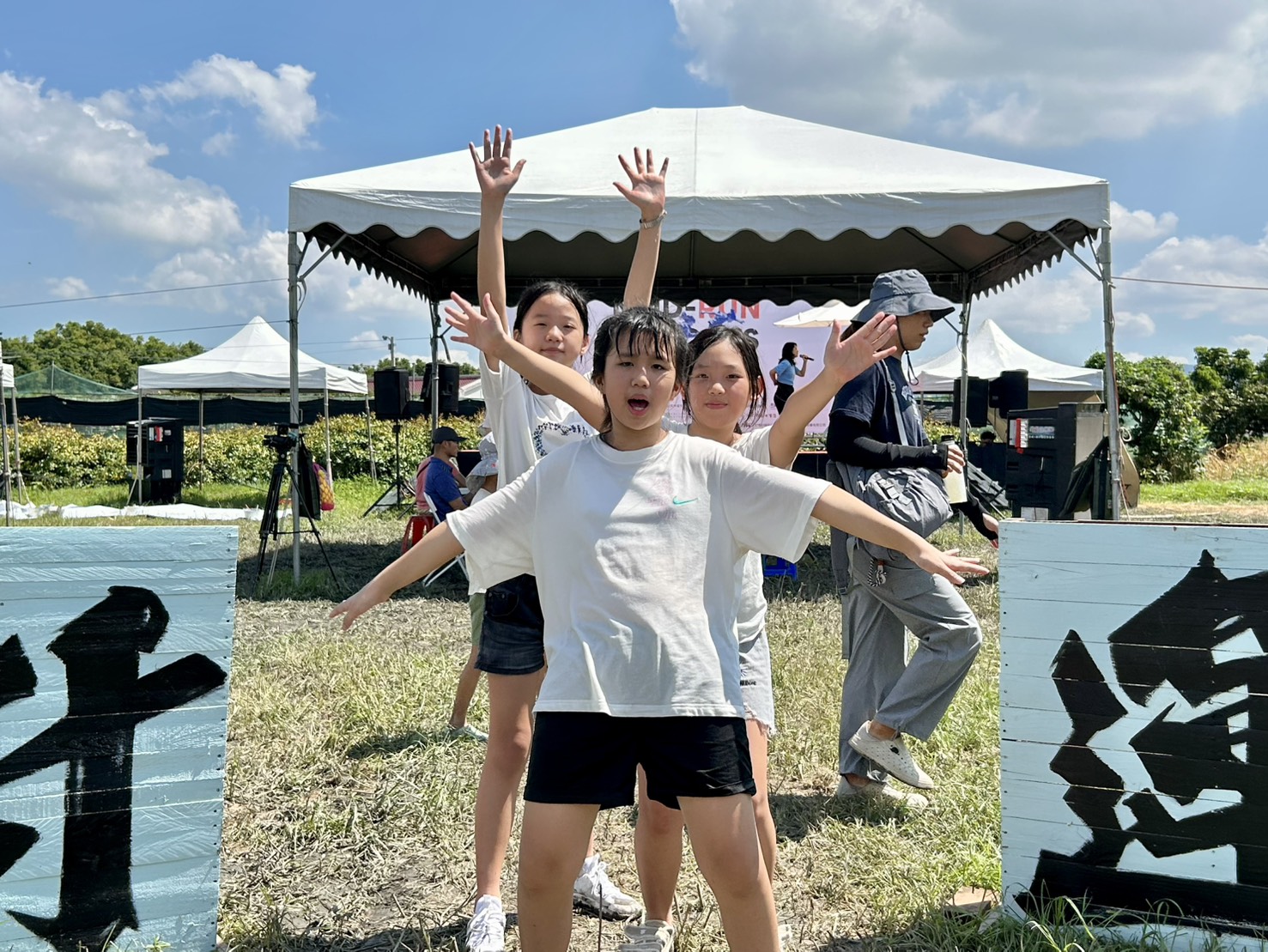
Qiu Zi-Rong
For this project presentation, we put in a lot of effort, not only by conducting field interviews but also by planting soybeans on campus ourselves. I discovered that farmers work very hard and require patience, time, and financial investment, while also potentially facing natural disasters. Although the process was tiring, I felt a great sense of accomplishment when I saw the results. Through this activity, I gained a better understanding of soybean products and learned to cherish food.
For this project presentation, we put in a lot of effort, not only by conducting field interviews but also by planting soybeans on campus ourselves. I discovered that farmers work very hard and require patience, time, and financial investment, while also potentially facing natural disasters. Although the process was tiring, I felt a great sense of accomplishment when I saw the results. Through this activity, I gained a better understanding of soybean products and learned to cherish food.
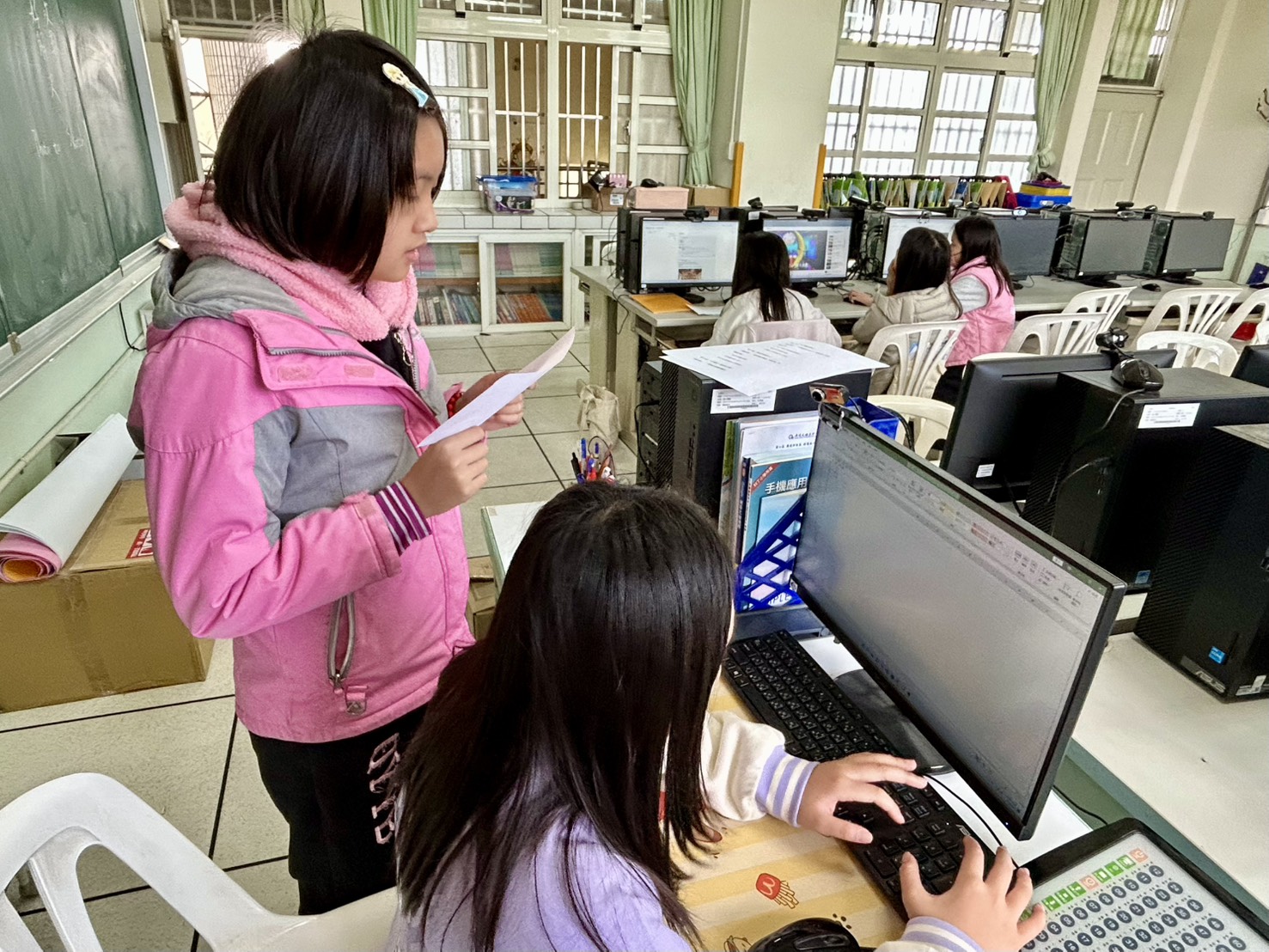
Li Jia-En
The most difficult part for me this time was creating the presentation. Since I am not very familiar with computer operations, I encountered many difficulties using Canva. Furthermore, because my original teammate did not participate, I ended up completing the presentation almost entirely by myself. Although the process was hard, I kept asking the teachers for help, and finally finished it, which made me more capable. When visiting Tian Ye Qin Xue, I saw many butterflies dancing in the soybean fields, which felt very dreamy. I also understood how natural farming helps the land, and the significance of Tian Ye Qin Xue's work in planting soybeans for the development of Beidou. I truly admire them!
The most difficult part for me this time was creating the presentation. Since I am not very familiar with computer operations, I encountered many difficulties using Canva. Furthermore, because my original teammate did not participate, I ended up completing the presentation almost entirely by myself. Although the process was hard, I kept asking the teachers for help, and finally finished it, which made me more capable. When visiting Tian Ye Qin Xue, I saw many butterflies dancing in the soybean fields, which felt very dreamy. I also understood how natural farming helps the land, and the significance of Tian Ye Qin Xue's work in planting soybeans for the development of Beidou. I truly admire them!
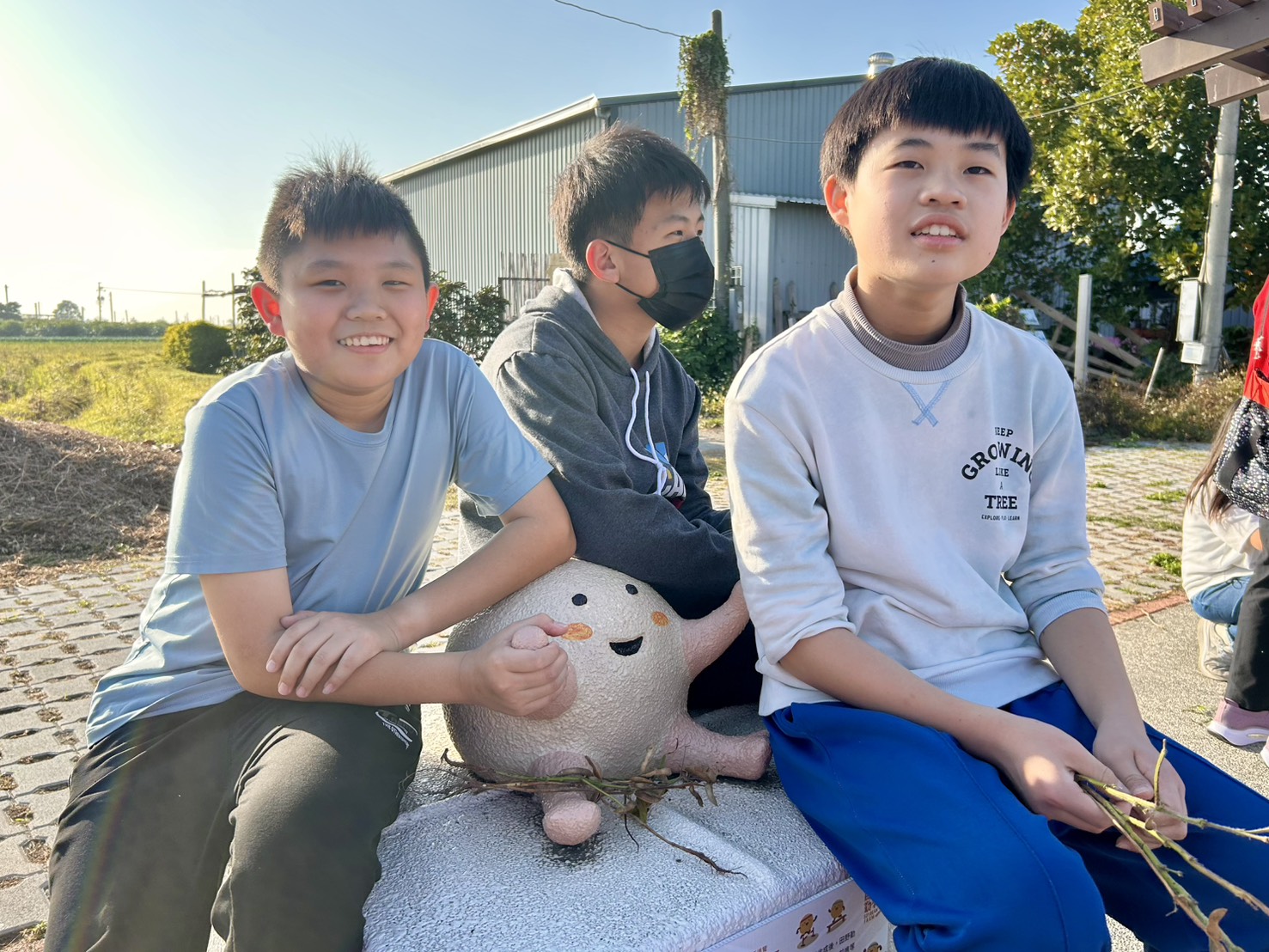
Xu Kai-Hong
This CyberFair project was more in-depth than the ones I have done before. Previously, I mostly just looked up information in the classroom, but this time we conducted actual interviews, visited sites, and made soy products by hand, making the whole process more realistic and challenging. When designing the interview questions, I learned that questions need to have direction and cannot be too general. During the actual interviews, I learned to listen attentively instead of just reading from a script. When organizing the final results, I felt more organized and understood teamwork better. This project allowed me to break through my limits and gain a lot.
This CyberFair project was more in-depth than the ones I have done before. Previously, I mostly just looked up information in the classroom, but this time we conducted actual interviews, visited sites, and made soy products by hand, making the whole process more realistic and challenging. When designing the interview questions, I learned that questions need to have direction and cannot be too general. During the actual interviews, I learned to listen attentively instead of just reading from a script. When organizing the final results, I felt more organized and understood teamwork better. This project allowed me to break through my limits and gain a lot.
Fude Elementary School, Yongjing Township, Changhua County
Address: No. 36, Fude Lane, Yongjing Township, Changhua County 512
